Ecommerce analytics
Returns Dashboard
A production ecommerce reporting system that made return, marketplace, and economics data easier to audit, explain, export, and operate.
Problem
The team needed operational reporting across fragmented ecommerce sources without blending unlike data into confident but misleading summaries. The hard part was not simply rendering charts. It was making freshness, source disagreement, null/provisional data, cohort maturity, and export semantics visible enough for operators to trust the dashboard.
Work
- Built and refined internal dashboard surfaces for returns, marketplace reporting, observed economics, diagnostics, and exports.
- Used source-backed audits to identify data-quality risks and clarify what each report could and could not claim.
- Worked through migrations, recurring sync behavior, and release verification so the reporting layer matched the live data model.
Outcome
The dashboard became a decision system rather than a pile of charts. It made operational data more trustworthy by showing uncertainty and gaps instead of hiding them behind blended metrics.
Build story
From operational mess to trustworthy system.
Fragmented sources
Returns, marketplace, economics, diagnostics, and exports had to keep their own semantics visible.
Risky summaries
Incomplete cohorts, nulls, provisional months, and source disagreement could make charts look more certain than they were.
Operator trust
The dashboard needed to show gaps, freshness, and export meaning instead of hiding them.
What shipped
- Dashboard surfaces for returns, marketplace reporting, observed economics, diagnostics, and exports
- Cohort maturity handling so incomplete periods are not treated as final truth
- Source-backed report semantics for filters, scope, exports, and marketplace-specific views
- Recurring sync and migration work with deployment verification
Guardrails
- Provisional-data states surfaced directly in the reporting UI
- Source disagreement and freshness treated as first-class report context
- Export and dashboard semantics kept aligned so operators do not copy misleading numbers
Proof artifacts
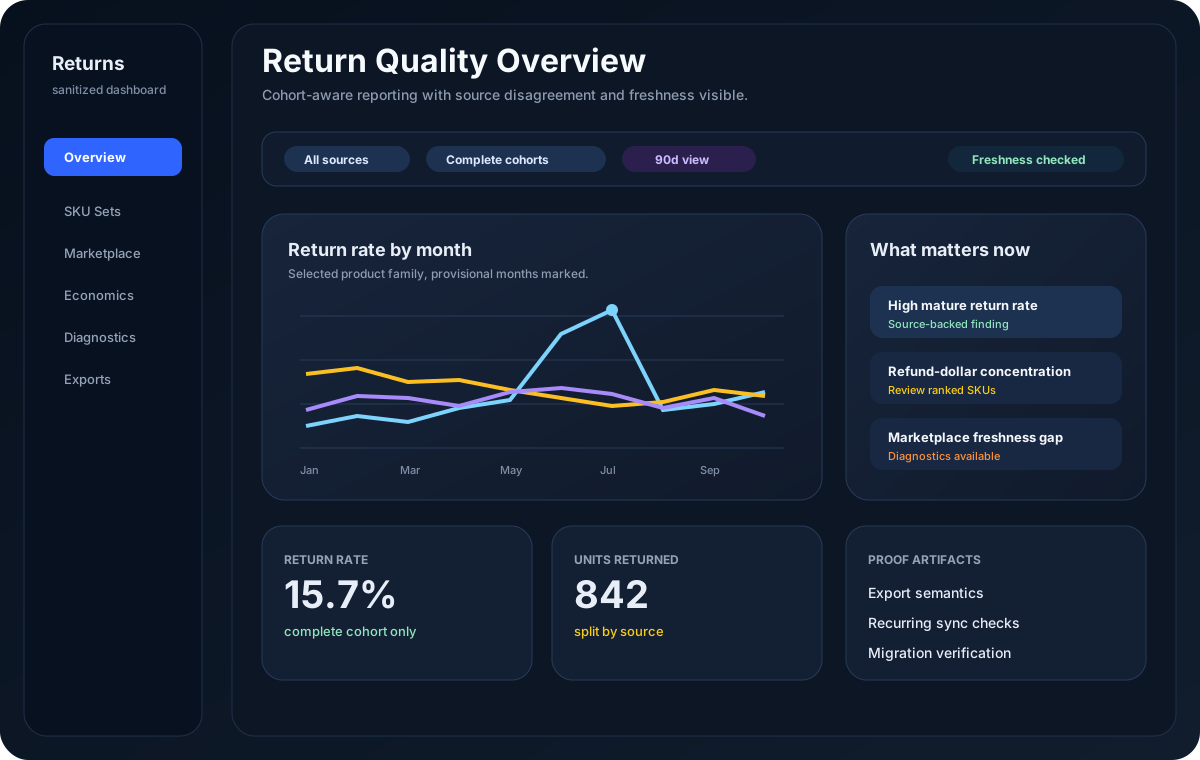
- Sanitized dashboard visual showing trend, source, diagnostics, and ranked-SKU surfaces
- Migration status and deployment verification notes kept separate from unsupported impact claims
- Report copy that names what each source can and cannot prove
Outcome
- Operators get a decision system instead of a pile of charts
- The interface makes uncertainty visible before summaries are used
- The reporting layer is easier to audit, explain, export, and operate